Why propane
A fuel that works where you live, and burns cleaner than oil or wood
Out past the pipeline, propane is the practical choice: a fuel you store on your own land that heats and cooks efficiently, keeps working when the grid goes down, burns cleaner than the heating oil or wood it replaces, and protects the soil and water your family depends on. Here is the case.
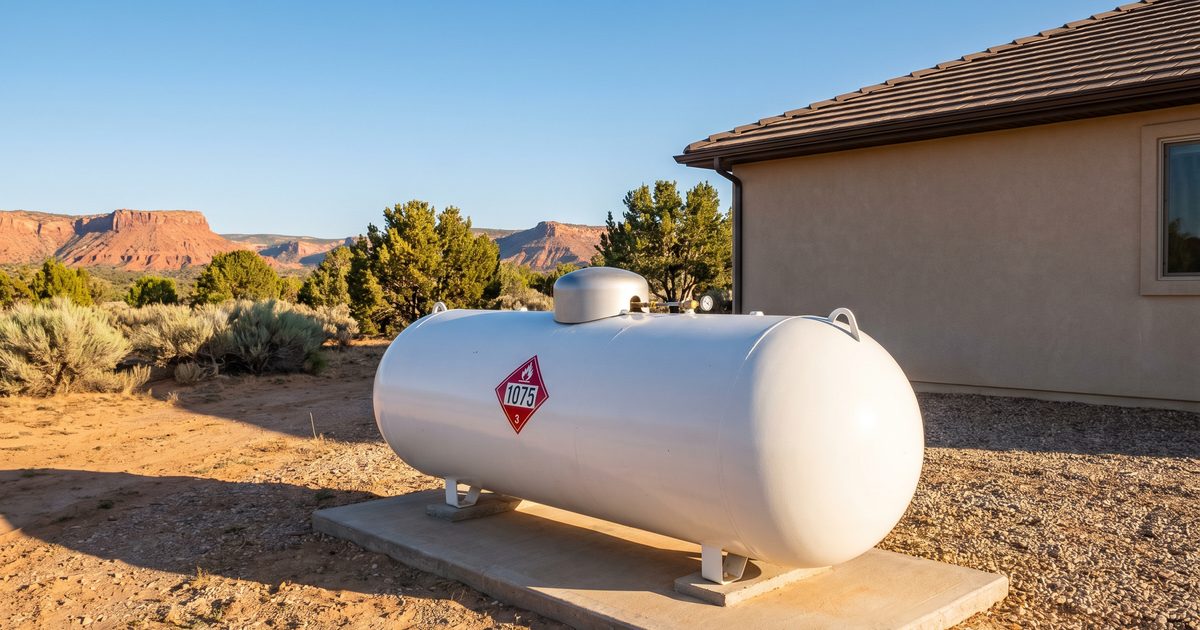
Burns cleaner than oil or wood — and protects the land
Compared to the heating oil, diesel, or wood it usually replaces, propane burns cleaner: far less soot and fine particulate, and very low sulfur-oxide (SOx) and nitrogen-oxide (NOx) emissions that foul the air inside and around a house. That is why the U.S. Clean Air Act lists propane as a clean alternative fuel — a real federal designation, not a marketing line.
Just as important out here, propane protects the land itself. It is non-toxic and stored as a gas, so a propane line does not poison the soil or the groundwater the way a leaking heating-oil tank can. There is no buried oil tank to corrode, no contamination to clean up, nothing seeping into the ground your family and your livestock draw water from. And when you switch from heating oil to propane, you cut your carbon dioxide by roughly 14 percent for the same heat. That is how propane actually works on the land — not a slogan, just the numbers.
Efficient where it counts
Propane appliances are efficient for the jobs a home uses most. According to U.S. Department of Energy figures, a propane water heater can cost noticeably less to run than a standard electric one, and a propane clothes dryer can dry a load in about half the time of a comparable electric dryer. Propane furnaces produce warm air quickly and run efficiently — using less fuel to deliver the same comfort, which means lower emissions and a lower bill at the same time.
Reliable, and stored right here
Your propane is stored in a tank on your own property. That means when a winter storm or a downed line takes out the power, your heat, hot water, and cooking can keep running — and a propane standby generator can keep the well pump and freezer going. You are not waiting on a utility to come back, and you are not driving to town for fuel.
Precise cooking, real control
A propane range gives you instant, adjustable flame and precise temperature control — the reason many cooks prefer gas. Turn it up, turn it down, turn it off; what you set is what you get.
Propane vs electric
Electric heat and electric water heating depend entirely on the grid — and out here, the grid can be far away and the power can go out. Where the local grid still leans on coal, propane heat can actually carry a lower carbon footprint than electric resistance heat once you count the power plant. And propane gives you on-site storage and appliances that keep working through an outage. For homes and ranches off the natural-gas pipeline, propane delivers efficient heat, hot water, cooking, drying, and backup power from one fuel you keep on hand.
One fuel, many jobs
Propane runs the furnace, the water heater, the cookstove, the dryer, the shop heater, the standby generator, the grill, and the ranch equipment. One delivery, one account, one company that knows your place — and a neighbor who picks up the phone.
Efficiency, cost, and emissions figures are general U.S. Department of Energy and EPA appliance and fuel comparisons and vary by home, appliance, fuel switched from, and local energy prices. Ask us about your specific situation.