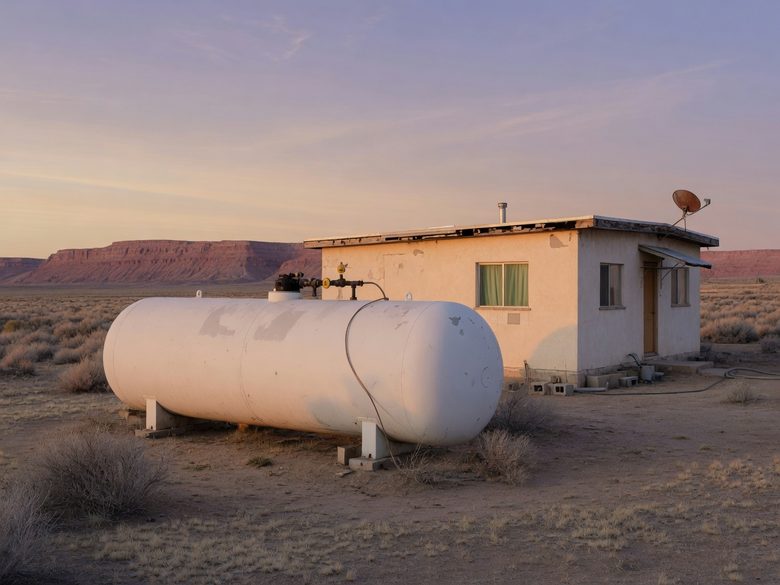
Smell gas? Emergency?
Do not use the contact form. Leave the building and call now.
435-255-1020From a safe distance, call 911 first, then call us. Our emergency line is answered 24 hours a day.
Propane is a reliable fuel when it is handled correctly — but like any fuel, it must be treated with care. Knowing what to do before, during, and after a problem matters, and we want every customer to have this information before they ever need it. For the full version of what we are obligated to tell you, see our duty-to-warn page.
If you smell propane
Propane has a strong odor like rotten eggs, a skunk, or a dead animal. That smell is added on purpose — propane itself is naturally odorless — so you know when there is a problem. If you smell it, treat it as an emergency and act in this order.
No flames or sparks. Put out smoking materials and open flames. Do not touch switches, thermostats, or appliances — a small spark can ignite gas.
Leave immediately. Get everyone out of the building and away from the area. Do not stop to gather belongings.
Shut off the gas if it is safe. If you can safely reach the tank, close the main supply valve by turning it to the right (clockwise).
Call from a safe distance. Away from the building, call 911 or the fire department first, then call us at 435-255-1020. Do not use a phone inside or near the building.
Stay out. Do not re-enter until your propane supplier or emergency responders tell you it is safe.
Get the system checked. Before using any propane appliance again, have a qualified technician confirm the system is leak-free.
You may not always smell a leak
Do not rely on your sense of smell alone. The added odorant can sometimes fade — air, water, or rust in a new tank or steel pipe can weaken it, gas leaking underground can be filtered by soil, and the odorant can stick to pipes or fabrics. Cold or very dry air can also reduce the smell. Your own sense of smell can be reduced by a cold, allergies, age, or simply growing used to an odor — and a leak may not wake you while you sleep. Because of this, we recommend installing UL-listed propane gas detectors as a backup. Read more about odor fade and our duty to warn you →
Carbon monoxide awareness
Carbon monoxide (CO) is a toxic gas you cannot see or smell. It forms when any fuel does not burn completely — which can happen if an appliance is faulty, poorly maintained, or improperly vented.
Symptoms feel like the flu without a fever: headache, dizziness, weakness, nausea, shortness of breath, sleepiness, or confusion.
Watch for incomplete combustion:
- A yellow or wavering burner flame that should be steady blue
- Soot or black marks near appliances and vents
- An unusual or burning smell, or excess moisture on windows
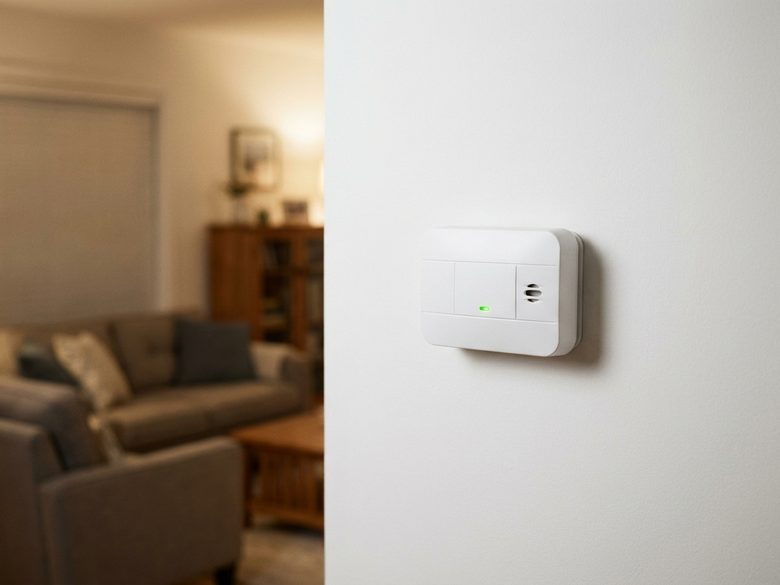
Install UL-listed CO detectors on every level of your home and outside sleeping areas. If a CO alarm sounds, get everyone to fresh air immediately, then call 911.
Reading your tank gauge & the 80% rule
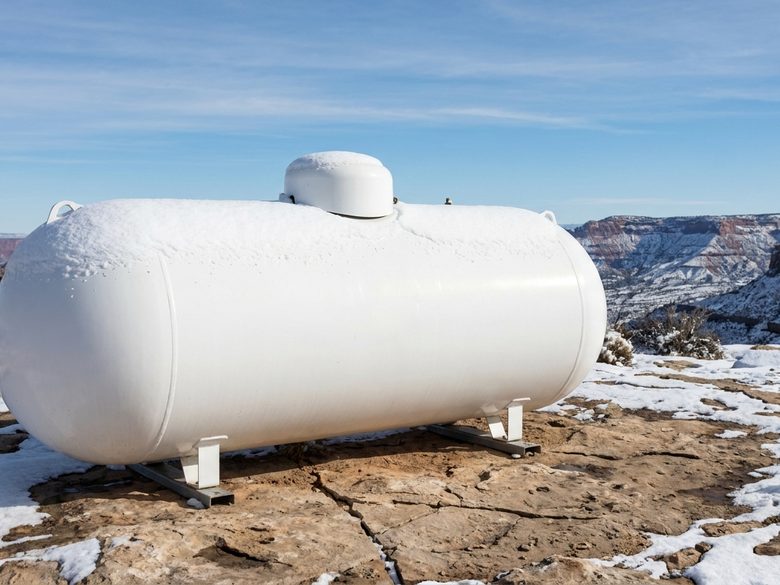
Your gauge shows the percentage of propane in the tank, not gallons. A full tank reads about 80% — tanks are never filled higher, because propane expands and contracts with temperature and needs room to do so safely. It is a safety requirement, not a billing decision. If your gauge reaches 20–30%, schedule a delivery. Keep-full customers never have to check.
Never let your tank run empty
Running out of propane is more than an inconvenience — it can be dangerous, and out here it can mean no heat on a cold night.
- When the tank empties, the system loses pressure and air can enter the lines. Under NFPA 58, a leak check and pressure test is required before we can refill and restart your system.
- Pilot lights and valves left open while the tank was empty can let air — and a loss of odorant — into the lines.
- Pilot lights must be safely relit by a qualified technician, never by you.
Turn off the tank valve and call us to schedule a refill and the required safety check. The surest way to avoid a run-out is automatic keep-full delivery.
Power outages & generators
Outages can happen in any season and quickly turn from inconvenience to hazard.
- Know where your main shutoff valve is and how to close it before a storm.
- Never run a propane generator, grill, or other outdoor appliance indoors, in a hogan, or in a garage — carbon monoxide can be deadly.
- After power returns, if you smell gas or hear hissing, follow the emergency steps above.
Winter, snow & blowing sand
High-desert weather puts extra demands on a propane system.
- Keep snow and ice cleared off your tank, regulator, vents, and chimney. A blocked vent can let carbon monoxide build up indoors.
- Keep regulator vents clear of blowing sand and debris in dry wind.
- Mark your tank and the path to it so they are visible in deep snow and so our truck can reach them.
- Keep the road to the tank clear so our delivery truck can get through.
- Watch your gauge in cold snaps — heating systems work harder and use more fuel.
Grill & portable cylinders
- Use only DOT-approved cylinders and have them requalified on schedule.
- Never overfill — cylinders are filled to a maximum of 80% to allow for expansion.
- Always transport and store cylinders upright and outdoors — never inside a home, hogan, garage, or closed vehicle.
- Use the correct regulator and check every connection before lighting.
Annual inspections & never DIY
Have your propane appliances and system inspected by a qualified technician at least once a year. Do not install, modify, adjust, or repair any tank or appliance part yourself. Call us at the first sign of a problem — an odd flame, an unusual smell, soot, or any appliance that is not working right. Our work follows the industry safety standard, NFPA 58 (the Liquefied Petroleum Gas Code), as adopted by your local authority.
Have a safety question — no emergency?
If something does not seem right but it is not an emergency, we are glad to help. A neighbor picks up.
Call 435-255-1020Last reviewed July 2026. General safety information only; always follow the instructions of your propane provider and local emergency services.