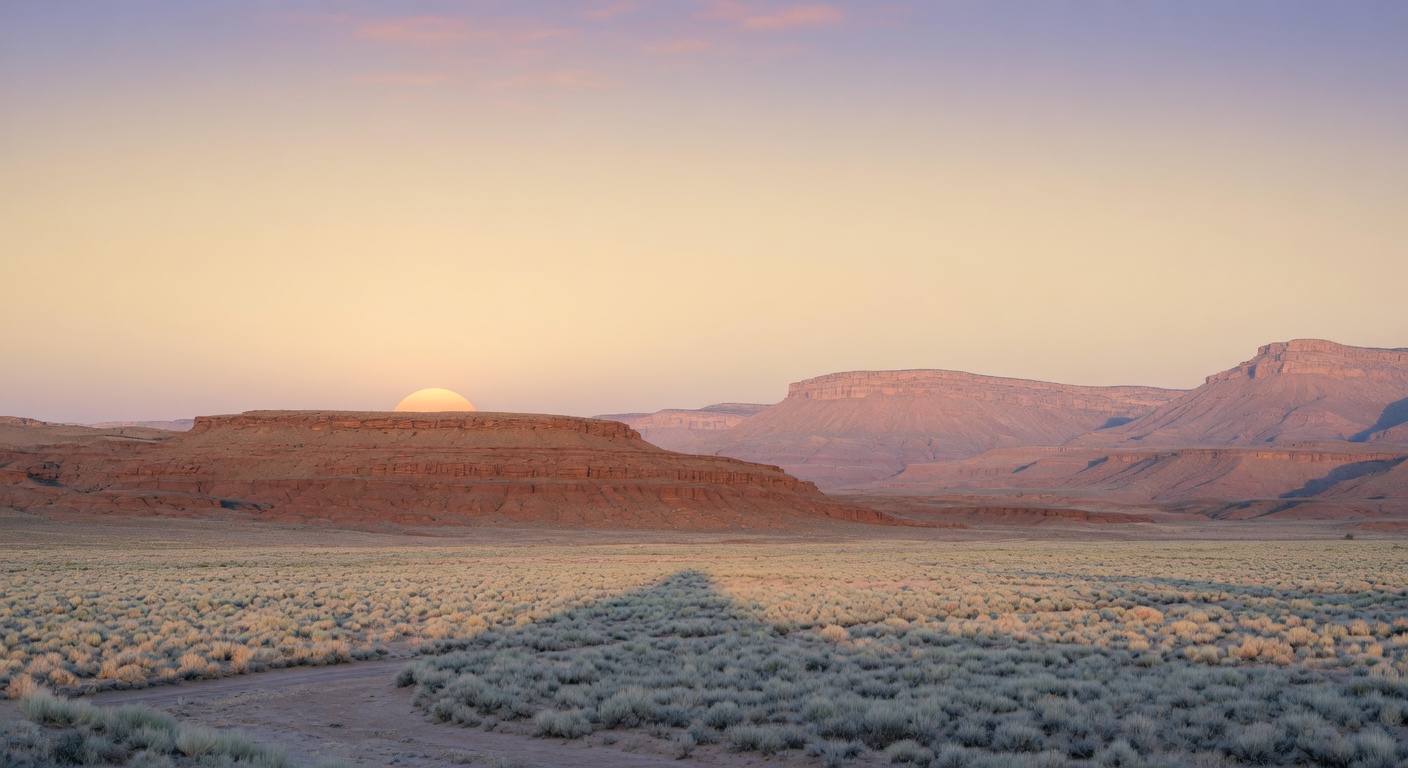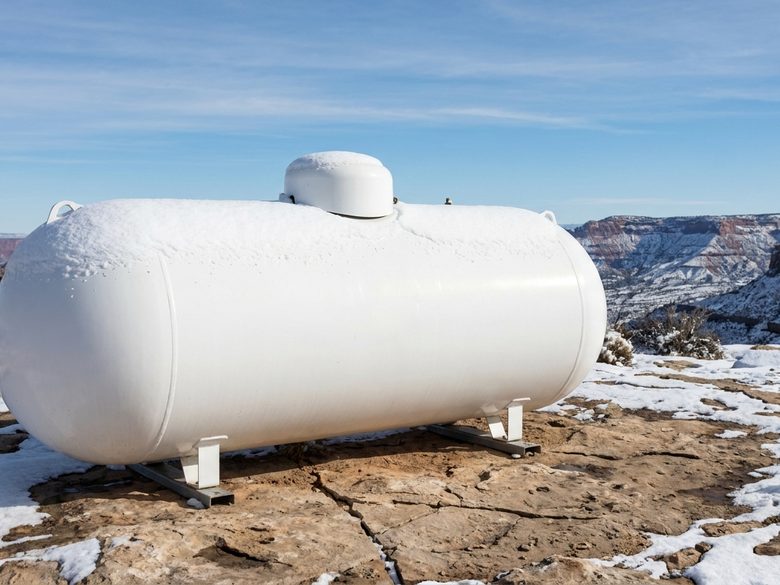
Winter on the reservation is no joke. Between Montezuma Creek and the far corners of our service area — out toward Kayenta, Chinle, Blanding, and every community in between — a single winter storm can close roads for a day or more. If your propane tank runs low right when a storm rolls in, that’s not a small inconvenience. It’s your heat, your hot water, and in a lot of homes out here, your only way to cook.
We’ve been running deliveries across this territory long enough to know that the families who plan ahead for winter have a much easier season than the families who wait until the gauge reads empty. Here’s what we want every household and business we serve to know before the cold sets in.
Know your tank level before the first hard freeze
Most residential tanks in our service area are 250-, 500-, or 1,000-gallon systems. As a rule of thumb, propane companies recommend never letting your tank drop below 20% — that’s the point where sediment and moisture at the bottom of the tank can get pulled into your lines, and it’s also close to the point where a delivery delay could leave you without heat entirely.
Check your tank gauge regularly once temperatures start dropping. If you’re not sure how to read it, that’s a completely normal question — ask your driver next time we’re out, or call the office and we’ll walk you through it.
Understand your delivery options: will-call vs. scheduled
There are two basic ways propane delivery works, and it’s worth knowing which one applies to you:
- Will-call means you’re responsible for tracking your own tank level and calling us when you need a delivery. This gives you control, but it also means the responsibility for not running out sits with you — and in winter, a last-minute call during a storm can mean a longer wait than you’d like.
- Scheduled / keep-full delivery means we track your usage pattern and schedule deliveries before you’re likely to run low, so you’re not the one watching the gauge. For most households, especially anyone managing an elder’s home or a property they don’t visit daily, this takes one more thing off your plate heading into winter.
If you’re not sure which setup you’re on, ask us — we’re happy to explain what you have and whether switching makes sense for your household.
Weather and road conditions affect delivery timing
Our routes cover a lot of ground across the Navajo Nation, from our Montezuma Creek yard out through Aneth, Red Mesa, Mexican Water, Bluff, Mexican Hat, Monument Valley, Kayenta, Dennehotso, Rock Point, Blue Gap, Whippoorwill, Chinle, Many Farms, and the surrounding communities. Some of these roads are a straightforward drive in good weather and genuinely difficult after snow or ice. We plan our routes around conditions, but we can’t control the weather — which is exactly why calling early, before your tank gets critically low, gives us the most room to get to you safely and on time.
If a storm is forecast and your tank is getting low, don’t wait for it to hit. Call ahead.
A note on carbon monoxide safety
Every winter, furnaces, water heaters, and other propane appliances get worked harder than the rest of the year — and every winter, we want to remind our customers about carbon monoxide (CO) safety. CO is colorless and odorless, and cold-weather appliance strain is when problems are most likely to show up. If your home doesn’t already have a working CO alarm on every level, get one installed before winter arrives. If you ever smell an odor like rotten eggs (the additive in propane, added specifically so leaks are detectable) or your CO alarm sounds: get everyone out of the house immediately, call 911 from a safe location outside, and then call us. Don’t try to locate the leak yourself, and don’t go back inside until emergency responders say it’s safe.
Tank inspections and appliance checks
Before the season gets going, it’s worth having your tank, regulator, and connections given a look, especially if it’s been a while since your last service visit or if you’ve noticed anything unusual — a hissing sound, a smell near the tank, or frost buildup on the tank itself that wasn’t there before. Catching a small issue in October beats dealing with a bigger one during a January cold snap.
Reach out before you’re in a bind
We serve the Navajo Nation because it’s home — this is our community too, not just our territory. If you have questions about your tank, your delivery schedule, or getting set up for winter, call our office. We’d rather answer a question in October than get an emergency call in the middle of a storm.
Running Horse Services · US Route 162 and Route 262, Montezuma Creek, UT 84534 · 435-255-1020